If you’ve ever walked into a busy Japanese ramen shop, a casual izakaya, or a frozen food production line bustling at 2 a.m., you’ve seen them: gyoza machines quietly churning out plump, uniformly shaped dumplings by the thousands, a reliable backbone of the food service industry. As a supplier who’s been working directly with restaurants, small-scale food manufacturers, and artisanal producers for over a decade, the question I hear most often isn’t “How much does a gyoza machine cost?” It’s “How long will this thing last?” Gyoza Machine
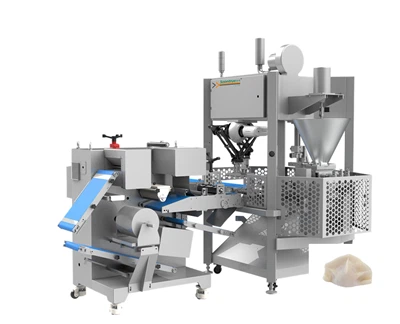
The honest answer is: it depends. A gyoza machine’s lifespan isn’t a one-size-fits-all number scribbled on a spec sheet. It’s shaped by how you use it, how you care for it, and even what kind of machine you buy in the first place. Let me walk you through what I’ve learned from years of troubleshooting, installing, and supporting these machines for customers across North America and beyond.
First, let’s talk about the two core categories of gyoza machines, because that’s the biggest factor right out the gate. There are countertop machines for small businesses—think family-owned izakayas with 10 tables, or a small frozen food operation that makes 500 dumplings an hour—and there are industrial, floor-to-ceiling models that pump out 10,000+ gyoza an hour for large distributors and grocery store brands. Small countertop machines, built for light, intermittent use, typically have a baseline lifespan of 5 to 7 years. I’ve seen some get pushed to 10, but only with consistent, expert care. Industrial machines, on the other hand, are built for 24/7 or near-24/7 operation, with heavy-duty stainless steel frames and precision parts. A well-maintained industrial gyoza machine can easily run 15 to 20 years, and I’ve even got a customer in Chicago who’s had a 1998 model still cranking out pork gyoza for their chain of 12 restaurants. That’s not a fluke; that’s intentional design paired with consistent maintenance.
But here’s the thing: that baseline number doesn’t mean much if you misuse your machine. The biggest culprit that cuts a gyoza machine’s life short is operator error. Early in my career, I worked with a new restaurant owner who bought a mid-sized countertop machine, hired a line cook with no training, and ran it nonstop during weekend rushes—8 to 10 hours straight, no breaks. The machine’s motor seized up after 18 months, because constant use without letting the cooling system rest and without cleaning out excess dough and filling gunk caused the gears to grind down prematurely. Another common mistake? Using the wrong ingredients. I’ve seen customers use too much oil in their gyoza filling, which leaks into the machine’s rollers and bearings, causing rust and build-up that ruins moving parts over time. Or overstuffing the gyoza, which puts unnecessary pressure on the sealing mechanism, leading to bent parts or broken seals within a year instead of five.
Then there’s maintenance, the make-or-break factor that most new owners overlook. Think of a gyoza machine like a car: you wouldn’t skip oil changes and expect it to run for decades, right? Same rule applies here. Routine maintenance breaks down into daily, weekly, and annual tasks, and skipping even the small daily steps adds up fast.
Daily maintenance is non-negotiable. After every single shift, you have to take apart the rollers, the filling hopper, and the sealing die, and scrub every nook with warm, soapy water—no food-safe sanitizer that can leave residue, just gentle, food-grade soap. Any leftover dough or filling that dries overnight turns into a hard, abrasive substance that scratches rollers and clogs moving parts. I once had a customer who only cleaned their machine once a week; within two years, their sealing die was so scratched that 30% of their gyoza split open during cooking, costing them thousands in wasted ingredients and lost customers. Also, daily, you need to lubricate the moving parts with the food-grade lubricant we supply with every machine. Don’t use regular vegetable oil or WD-40—those break down quickly and attract dust and debris, leading to clogs and wear.
Weekly maintenance goes a step further. Every week, you should inspect the belts that drive the machine. Gyoza machines use rubber or polyurethane belts to turn the rollers and feed the dough, and if they get stretched or frayed, they cause uneven gyoza shapes and put extra strain on the motor. Tightening or replacing a $20 belt is way cheaper than replacing a $500 motor because you waited too long. You also want to check the tension on the roller mechanisms; if they’re too loose, the gyoza dough is too thin, if too tight, it tears. Adjusting this weekly prevents unnecessary stress on the machine’s frame, which can bend over time if left unaddressed.
Annual maintenance is where we come in as your supplier. We offer annual service calls for all our customers, where our technicians will disassemble the entire machine, deep-clean hard-to-reach parts, replace worn bearings and seals, and calibrate the machine to run like new. For our industrial clients, we also offer bi-annual maintenance, since their machines run so much harder. Last year, a food distributor in Texas brought in their 12-year-old industrial model for its annual service; our technician replaced a single set of rollers and tightened one bearing, and it was running as smoothly as when they bought it. Without that service, that machine would have needed a full motor replacement within two years, costing them 10 times more than the service call.
Environment also plays a role, and it’s a factor I see overlooked all the time. A machine installed in a damp, unventilated back kitchen? Rust becomes a major issue. Even stainless steel, which is resistant to rust, can corrode if it’s exposed to constant moisture and food acid from gyoza filling. I had a customer in Seattle who put their countertop machine in a corner by the sink, where water would splash on it all day. After three years, the frame had tiny rust spots that spread to the internal gears, and we had to replace the entire drive system. A machine installed in a dry, temperature-controlled space, away from direct moisture and extreme heat, will last 20-30% longer than one in a harsh environment. Also, don’t move your machine unnecessarily. Every time you disconnect and relocate a gyoza machine, you risk misaligning the internal components, which can cause premature wear. If you have to move it, hire a professional—we offer moving and installation services for that exact reason.
Now, let’s talk about signs that your gyoza machine is nearing the end of its life, or that it needs a repair before it breaks down completely. The first sign is inconsistent output: gyoza that are too thin, too thick, or have uneven seals. This is usually a sign of worn rollers or a misaligned sealing die, but if you’ve calibrated and replaced those parts already, it might mean the machine’s frame has bent or the motor is losing power, which are more serious issues. Another sign is unusual noises: grinding, squealing, or clunking that’s not normal for your machine. That’s your gears or bearings telling you they’re worn out, and if you don’t address it, they’ll seize up and cause major damage. Leaks of oil or lubricant are another red flag; that usually means a seal has broken, which can lead to contamination if not fixed, and can cause parts to rust.
One thing I always tell customers is that “lifespan” doesn’t mean when the machine stops working entirely. It means when it’s no longer efficient enough to meet your needs. A 15-year-old industrial machine might still work, but if it uses 30% more electricity than a new model, or produces 10% less consistent gyoza, it might be time to upgrade even if it’s not broken. For small business owners, that balance between repair cost and new machine value is important; a $1000 repair for a 6-year-old countertop machine that only costs $3000 to replace might not make sense, but a $500 repair for a 10-year-old industrial machine that costs $20,000 to replace is worth every penny.
Over the years, I’ve seen my fair share of gyoza machines. I’ve had customers call me panicking at 8 a.m. on a Saturday because their machine broke during brunch rush, and I’ve had customers celebrate their 15th anniversary with the same industrial model they bought from me. The difference between those two? They took care of their machine, listened to the maintenance advice, and didn’t push it beyond its limits.
At the end of the day, a gyoza machine is an investment in your business. It’s not just a piece of equipment that makes dumplings—it’s what allows you to serve consistent food to your customers, keep up with demand, and grow your business. That’s why we don’t just sell machines; we provide training, maintenance support, and replacement parts to make sure your machine lasts as long as it possibly can.

If you’re in the market for a gyoza machine, or you have one that’s been acting up and you want to get the most out of it, don’t guess at its lifespan or how to care for it. Reach out to us to discuss your specific needs, whether you’re a small izakaya looking for a countertop model or a large distributor needing an industrial line. We’ll help you choose the right machine for your volume, walk you through every maintenance step, and make sure you get years of reliable service.
Meat and Vegetables Processing Machine References
- National Restaurant Association. (2022). Commercial Food Equipment Maintenance Guidelines.
- Food and Agriculture Organization of the United Nations. (2021). Small-Scale Food Processing Equipment: Lifespan and Best Practices.
- Industrial Food Processing Machinery Association. (2023). Durability and Maintenance Standards for Gyoza and Dumpling Manufacturing Equipment.
Chengdu Wonderful Serendipity Food Machinery Co., Ltd.
Chengdu Wonderful Serendipity Food Machinery Co., Ltd. is one of the most professional gyoza machine manufacturers and suppliers in China. If you’re going to buy discount gyoza machine made in China, welcome to get more information from our factory. Also, customized service is available.
Address: No. 51 Tianxiang Road Back Street, Tianxiang Road Community, Wanchun Town, Wenjiang District, Chengdu City, Sichuan Province (206-99)
E-mail: nancy@cdwsfm.com
WebSite: https://www.cdwsfm.com/
