As a leading provider in the metal 3D printing industry, I’ve witnessed firsthand the transformative power of this technology. Among the various materials we work with, titanium stands out due to its unique combination of properties that make it suitable for a wide range of high – performance applications. In this blog, I’ll delve into the properties of metal 3D printed titanium parts and explore why they are increasingly becoming the go – to choice in many sectors. Metal 3D Printing
Physical Properties
Lightweight and High Strength
Titanium is well – known for its impressive strength – to – weight ratio. This is a crucial property, particularly in industries such as aerospace and automotive, where reducing weight without sacrificing strength can significantly improve fuel efficiency and performance. Our metal 3D printed titanium parts can achieve complex geometries that maximize strength while minimizing material usage. For instance, in aerospace components like turbine blades or structural frames, the high strength allows the parts to withstand extreme forces during flight, while the low weight reduces the overall mass of the aircraft.
The density of titanium is approximately 4.5 g/cm³, which is significantly lower than that of steel (around 7.8 g/cm³), yet it can offer comparable or even higher strength in many scenarios. This makes it an ideal material for applications where weight savings are a top priority, such as in drone design or racing cars.
Excellent Corrosion Resistance
One of the most remarkable properties of titanium is its outstanding corrosion resistance. Titanium forms a thin, adherent, and protective oxide layer on its surface when exposed to oxygen. This oxide layer acts as a barrier that prevents further corrosion, even in harsh environments such as saltwater, acids, and alkalis.
In marine applications, for example, our 3D printed titanium parts can be used for propellers, submarine components, and offshore platforms. The corrosion resistance ensures a long service life, reducing the need for frequent maintenance and replacement, which in turn leads to cost savings in the long run. Even in chemical processing plants, where the parts are exposed to highly corrosive chemicals, titanium parts can maintain their integrity for extended periods.
Good Thermal Conductivity
Titanium has a relatively good thermal conductivity, which allows it to efficiently transfer heat. This property is beneficial in applications where heat dissipation is important, such as in heat exchangers or electronic components. Our 3D printed titanium heat exchangers can be designed with complex internal structures that enhance the heat transfer efficiency. The heat transfer coefficient of titanium is sufficient to handle a wide range of temperature differentials, making it suitable for both high – and low – temperature applications.
Mechanical Properties
High Fatigue Resistance
Fatigue failure is a common concern in many engineering applications, especially those involving cyclic loading. Titanium exhibits excellent fatigue resistance, which means it can withstand repeated stress cycles without failing. This property is particularly important in applications such as engine components, where parts are subjected to continuous vibrations and mechanical stress.
In our metal 3D printing process, the unique microstructure of the printed titanium parts can further enhance their fatigue resistance. The layer – by – layer deposition method allows for precise control of the material’s grain structure, resulting in a more uniform and refined microstructure that can better resist fatigue cracking.
Ductility and Formability
Although titanium is a strong material, it also has a certain degree of ductility. Ductility is the ability of a material to deform under tensile stress without fracturing. This property is useful in applications where the parts need to be shaped or deformed during assembly or use.
Our 3D printing technology enables the production of titanium parts with complex shapes that take advantage of its ductility. We can create thin – walled structures or parts with intricate geometries that would be difficult or impossible to manufacture using traditional methods. The formability of titanium also allows for post – processing operations such as bending and machining, which can further enhance the functionality of the parts.
Chemical Properties
Biocompatibility
Titanium is highly biocompatible, which means it is non – toxic and does not cause an immune response when in contact with living tissues. This property makes it an ideal material for medical applications such as implants, prosthetics, and dental devices.
Our metal 3D printed titanium medical parts can be customized to fit the specific needs of patients. For example, we can create patient – specific bone implants that match the exact shape and size of the damaged bone. The biocompatibility of titanium ensures that the implants integrate well with the surrounding tissues, promoting faster healing and reducing the risk of rejection.
Reactivity
While titanium is generally known for its good corrosion resistance, it is highly reactive at high temperatures. In the presence of oxygen, nitrogen, or hydrogen at elevated temperatures, titanium can form brittle compounds. This is an important consideration in our metal 3D printing process, as the high – energy laser used to melt the titanium powder can create a high – temperature environment.
To mitigate this issue, we use a controlled atmosphere during the printing process. By printing in an inert gas such as argon, we can prevent the titanium from reacting with the surrounding gases and ensure the quality of the printed parts. This also helps to maintain the desired mechanical and chemical properties of the titanium.
Applications of Metal 3D Printed Titanium Parts
Aerospace Industry
The aerospace industry is one of the largest consumers of 3D printed titanium parts. The combination of lightweight, high strength, and corrosion resistance makes titanium ideal for applications such as aircraft structural components, engine parts, and satellite hardware. Our metal 3D printing technology enables the production of complex and optimized parts that can improve the performance and efficiency of aerospace systems.
Medical Industry
As mentioned earlier, the biocompatibility of titanium makes it a top choice for medical applications. We can produce a wide range of medical devices, from simple implants to complex surgical tools. The ability to customize the design of these parts using 3D printing allows for better patient outcomes and more efficient healthcare delivery.
Automotive Industry
In the automotive industry, 3D printed titanium parts are used to reduce weight and improve performance. Components such as engine valves, connecting rods, and suspension parts can be made from titanium to enhance the vehicle’s power – to – weight ratio. Our metal 3D printing technology can produce these parts with high precision and quality, meeting the strict requirements of the automotive industry.
Why Choose Our Metal 3D Printed Titanium Parts
At our company, we have years of experience in metal 3D printing and a team of highly skilled engineers and technicians. We use state – of – the – art equipment and the latest manufacturing techniques to ensure the highest quality of our 3D printed titanium parts.
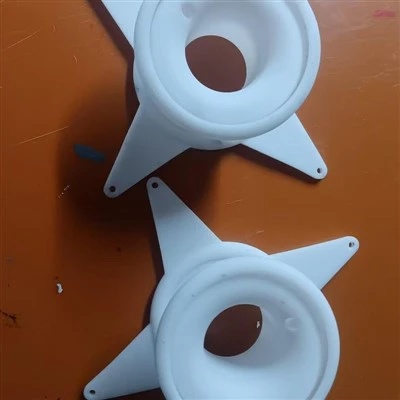
We offer a wide range of customization options, allowing our customers to design parts that meet their specific requirements. Whether it’s a simple prototype or a large – scale production run, we can provide fast turnaround times and cost – effective solutions.
Precision CNC Machining If you’re in need of high – quality metal 3D printed titanium parts, I encourage you to contact us for a no – obligation consultation. Our team will be happy to discuss your project, provide technical advice, and offer a competitive quote. Let’s work together to bring your innovative ideas to life!
References
- Callister, W. D., & Rethwisch, D. G. (2014). Materials Science and Engineering: An Introduction. John Wiley & Sons.
- Gibson, I., Rosen, D. W., & Stucker, B. (2015). Additive Manufacturing Technologies: 3D Printing, Rapid Prototyping, and Direct Digital Manufacturing. Springer.
- Schlienger, R., Mäder, E., & Füssel, U. (2019). Titanium: Microstructure, Properties, and Applications. Wiley – VCH.
Shenzhen Multi-Wins Precision Technology Co., Ltd.
As one of the most professional metal 3d printing manufacturers and suppliers in China, we have world-leading production equipment and strong manufacturing capabilities. Please feel free to buy customized metal 3d printing made in China here from our factory. Also, quotation is available.
Address: 1 Phase, Yi’an City Central Garden, Longfei Avenue, Longgang District, Shenzhen, GD, China. 518100
E-mail: info@multi-wins.com
WebSite: https://www.multi-wins.com/
