Hey there, if you’ve ever stood at the edge of a construction site, event setup, or even a tree service job staring up at a roof, light fixture, or thick canopy and thought, “Can that lift even reach that high?” — you’re not alone. As a boom lift supplier, I get this question a dozen times a day, and it’s never a one-size-fits-all answer. The maximum outreach of a boom lift isn’t just a random number pulled from a spec sheet — it’s a mix of the machine’s design, what you’re actually using it for, and even the ground you’re standing on. Let me break this down in real terms, no stuffy engineering jargon, just what you actually need to know. Boom Lift

First, let’s start with the basics: when we talk “outreach,” most people mix up height and horizontal reach, so I’ll clarify that right away. There are two big numbers here: maximum vertical height (how high the platform can go straight up) and maximum horizontal outreach (how far you can stretch the arm from the base, like reaching over a wall or a building edge). Both matter, and a lot depends on what kind of boom lift we’re dealing with. The two main types are articulated (the “knuckle boom” ones that bend like an elbow) and telescopic (the straight, stick-like ones that extend longways). Articulated ones are better for squeezing around obstacles like other equipment or building corners, while telescopic ones are built for straight, long reaches over open space.
Now, what’s the actual maximum number? Let’s keep it real, not the inflated sales numbers you might see online. For most standard boom lifts you’ll see on job sites or rental lots, the average maximum vertical height tops out around 185 feet, and maximum horizontal outreach is roughly 80 feet. Wait, before you think that’s way too short, that’s for a rough-terrain, diesel-powered boom lift — the workhorses for construction, utility, or big outdoor projects. If you’re talking about electric boom lifts for indoor use, like for a mall renovation or warehouse work, those max out around 130 feet tall with a horizontal reach of about 50 feet. Smaller, compact boom lifts for residential jobs (like trimming big backyard trees) clock in around 45 feet tall, with a reach of 25 to 30 feet. That makes sense, right? You don’t need a 185-foot boom lift to fix a fence, same way you don’t drive a semi-truck to pick up groceries.
But here’s the thing: those max numbers? They’re only achievable if every single condition is perfect. If you try to push the boom lift to its absolute limits, even one small thing will drop that outreach fast. Let’s talk about the biggest factors that mess with that number. First, ground stability. If you’re on soft dirt, mud, or uneven pavement, the lift’s outriggers (the stabilizing legs you lower to keep it from tipping) can’t do their job properly. Most standard boom lifts are rated for level ground — if you’re on a slope steeper than 5 degrees, that max outreach drops by 10 to 20% immediately. I’ve seen guys try to cram a boom lift onto a muddy access road and wonder why they can only reach 50 feet horizontally instead of 80 — it’s not the lift’s fault, it’s the ground. Second, the weight in the platform. That’s a huge one most people forget. If you have two 200-pound guys, a bunch of tools, and a roll of wire all in the 500-pound capacity platform, that’s almost maxed out. But if you load it down to 1,000 pounds (the rated capacity for some big boom lifts), that outreach can drop by as much as 30%. The manufacturer’s specs usually use a single 220-pound test dummy, so real-world load changes everything. Third, wind. I can’t tell you how many times we’ve had a job get delayed because the forecast called for 20+ mph winds. Even a light wind swaying a fully extended boom at 100 feet up is dangerous, and OSHA actually limits outreach when wind speeds hit that mark. A lot of operators don’t realize that — they’ll try to push the lift to reach a little further on a windy day, and that’s a no-go, not just for outreach but for safety.
Let me give you a real example to make this concrete. Last year, we had a customer doing a roof replacement on a 10-story building in downtown Chicago. He rented a 185-foot telescopic boom lift, which specs out at 80 feet of horizontal reach. The building had a narrow side alley he needed to reach over, so he thought he could stretch the full 80 feet to get to the roof edge. But when he showed up, the alley had some old, uneven asphalt that made the slope on the lift’s base about 7 degrees — steeper than the rated 5. So instead of 80 feet, that max outreach dropped to 65 feet, which was just enough. If he’d pushed it, he’d have been stuck halfway, or worse, risking tipping. That’s why checking ground slope before you even extend the boom is non-negotiable.
Now, if you’re wondering why some boom lifts look longer but have lower reach, it’s all in their design. Compact boom lifts for indoor use are built to fit through standard doorways, so their arms are shorter and their base is narrower, which limits their max height and reach. Rough-terrain diesel boom lifts have bigger tires and more power, so they can handle uneven ground, but their base is wider, which also eats into horizontal reach a little. There are also specialty boom lifts, like crawler boom lifts that roll on tracks for super soft ground (like wetlands or grassy sports fields) — those max out around 150 feet tall, with a reach of 70 feet, since their tracks are wider and lower to the ground for stability.
Another thing: when we advertise “maximum outreach,” it’s usually the horizontal reach, but sometimes people mix that with “working height” — which is how high the bottom of the platform is, plus your height. So if a boom lift has a 185-foot vertical height, that means the platform itself is 185 feet high, and if you’re 6 feet tall, you can reach up a little more, so your total working height is around 190 feet. That’s a fun little detail, but important to know when you’re planning to reach something above the platform.
As a boom lift supplier, I always tell customers to stop focusing on the absolute max number and focus on what they actually need. Wasting money on a 185-foot boom lift when you only need to reach 50 feet is a classic mistake. But undersizing is worse — nothing kills a job faster than a lift that can’t reach the spot you need to get to, forcing you to rent a second one and delay the whole project. I’ve had customers come back to us mad because they rented a cheap lift that only hit 60 feet when they needed 75, and they lost a day of work.
Now, if you’re in the market for a boom lift for your next project, here’s my pro tip: write down exactly two numbers you need — the maximum height you have to reach (add 10 feet to that, just in case) and the maximum horizontal stretch you need (add 15 feet, to account for obstacles like walls or other equipment). Then tell your supplier those numbers, not just “I want the biggest one you have.” We’ll hook you up with the exact model that fits, and make sure you know all the conditions that affect outreach.
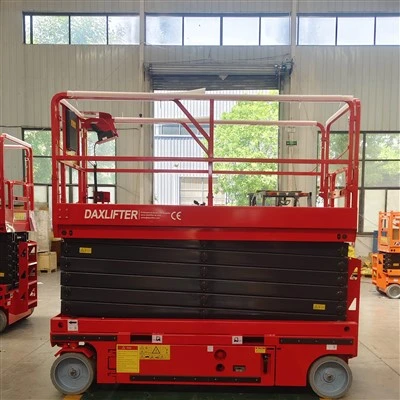
At the end of the day, the maximum outreach of a boom lift isn’t a static number — it’s a balance between the machine’s capabilities, the job site conditions, and how you use it. No spec sheet will ever account for a muddy access road or a windy day, but understanding those factors will help you choose the right lift and use it safely. If you’re planning a project and you’re not sure which boom lift will work best, don’t guess — reach out to us, and we’ll walk you through all your options, no pressure, no fine print.
Vertical Lifts References:
- Occupational Safety and Health Administration (OSHA). 29 CFR 1926.451, Scaffolds.
- International Organization for Standardization (ISO). ISO 16368:2017, Mobile elevating work platforms – Requirements for application, selection, operation and maintenance.
- American National Standards Institute (ANSI). ANSI SA92.1-2020, Safety Standard for Platform Lift Trucks.
- Access Industry Association of America (AIAA). Boom Lift Best Practices Guide, 2021.
Qingdao DAXLIFTER Machinery Co., Ltd.
Qingdao DAXLIFTER Machinery Co., Ltd. is well-known as one of the leading boom lift manufacturers and suppliers in China. Please feel free to buy high quality boom lift for sale here from our factory. For price consultation, contact us.
Address: Shouchuang Industry Park Qingdao China
E-mail: sales@daxlifter-al.com
WebSite: https://www.daxlifter-al.com/
