What is the chemical stability of a thermocouple?
As a thermocouple supplier, I’ve witnessed firsthand the critical role that chemical stability plays in the performance and longevity of these essential temperature – measuring devices. In this blog post, I’ll take a deep – dive into what chemical stability means for thermocouples, why it’s so important, and how it impacts their diverse applications. Thermocouple

Defining Chemical Stability in Thermocouples
Chemical stability refers to a thermocouple’s ability to resist chemical reactions such as oxidation, corrosion, and sulfurization when exposed to different environments. A thermocouple is composed of two different metal or alloy wires joined at one end. This junction generates a voltage proportional to the temperature difference between the measuring end and the reference end. If the chemical composition of the wires changes due to chemical reactions, the thermoelectric properties of the thermocouple can be altered, leading to inaccurate temperature measurements.
For example, in high – temperature applications, metals are more likely to react with oxygen in the air. Oxidation can form a layer of metal oxide on the surface of the thermocouple wires. This oxide layer may have different thermoelectric characteristics than the original metal, which can cause errors in temperature readings. Similarly, in environments with high levels of sulfur compounds, sulfurization can occur, where the sulfur reacts with the metal in the thermocouple wires, again affecting their electrical properties.
Factors Affecting Chemical Stability
There are several factors that can influence the chemical stability of a thermocouple:
1. Temperature
Temperature is one of the most significant factors. As the temperature increases, the rate of chemical reactions generally increases exponentially. At high temperatures, metals become more reactive, and the diffusion of oxygen, sulfur, or other reactive species into the thermocouple wires becomes faster. For instance, a thermocouple operating at 1000°C will experience a much higher rate of oxidation compared to one operating at 200°C.
2. Environment
The type of environment in which the thermocouple is used has a profound impact on its chemical stability. Different industries expose thermocouples to various chemicals and gases. In the chemical industry, thermocouples may be exposed to corrosive acids, alkalis, or solvents. In the food processing industry, they may be in contact with water, salts, and organic acids. In the power generation industry, thermocouples can be exposed to flue gases containing sulfur dioxide, nitrogen oxides, and particulate matter, all of which can cause chemical degradation.
3. Material Selection
The choice of materials for the thermocouple wires is crucial for chemical stability. Different metals and alloys have different levels of resistance to chemical reactions. For example, platinum – based thermocouples (such as Type S, R, and B) are highly resistant to oxidation and are often used in high – temperature and oxygen – rich environments. On the other hand, base metal thermocouples like Type K (chromel – alumel) are more susceptible to oxidation and sulfurization, but they are more cost – effective and suitable for many general – purpose applications.
Importance of Chemical Stability
The chemical stability of a thermocouple is of utmost importance for several reasons:
1. Measurement Accuracy
Accurate temperature measurement is essential in many industrial processes. In semiconductor manufacturing, for example, even a small deviation in temperature can lead to defective products. A thermocouple with poor chemical stability may produce inaccurate temperature readings due to the changes in its thermoelectric properties caused by chemical reactions. This can result in sub – optimal process control and significant economic losses.
2. Safety
In some industries, such as the petrochemical and nuclear industries, precise temperature measurement is critical for safety. In a petrochemical refinery, if a thermocouple fails to accurately measure the temperature of a furnace or a reactor due to chemical degradation, it could lead to overheating, which may cause explosions or fires. Therefore, ensuring the chemical stability of thermocouples is a matter of safety.
3. Longevity and Cost – Effectiveness
A thermocouple with good chemical stability will have a longer service life. Frequent replacement of thermocouples due to chemical degradation can be costly in terms of both the cost of the new thermocouples and the downtime associated with their replacement. By investing in thermocouples with high chemical stability, industries can reduce maintenance costs and improve overall operational efficiency.
Applications and Chemical Stability
Let’s look at some specific applications and how chemical stability of thermocouples is crucial in each:
1. Glass Manufacturing
In the glass – making process, thermocouples are used to measure the temperature of the molten glass, which can reach temperatures up to 1600°C. The molten glass contains various chemicals such as silica, soda ash, and limestone, and the high – temperature environment can cause oxidation of the thermocouple wires. Using thermocouples with high resistance to oxidation, such as platinum – based thermocouples, is essential to ensure accurate temperature measurement and prevent premature failure.
2. Steel Production
In steel mills, thermocouples are used to monitor the temperature of the steel during different stages of production, including melting, refining, and casting. The environment in a steel mill is highly aggressive, with high temperatures, sulfur – containing gases, and molten metal. Base metal thermocouples are often used due to cost considerations, but they may require protection tubes made of ceramic or other materials to enhance their chemical stability and extend their service life.
3. Food Processing
In the food processing industry, thermocouples are used to monitor the temperature during cooking, pasteurization, and storage of food products. The environment may be characterized by high humidity, organic acids, and salts. Thermocouples used in this industry need to be resistant to corrosion to avoid contamination of the food products and ensure accurate temperature measurement. Stainless – steel – sheathed thermocouples are commonly used due to their good corrosion resistance.
How We Ensure Chemical Stability in Our Thermocouples
As a thermocouple supplier, we take several measures to ensure the chemical stability of our products:
1. Material Sourcing
We carefully select high – quality metals and alloys for our thermocouple wires. We work with trusted suppliers to obtain materials that have consistent chemical compositions and high purity levels. For example, when manufacturing platinum – based thermocouples, we source platinum with a purity of at least 99.95% to ensure its excellent resistance to oxidation.
2. Manufacturing Process
Our manufacturing process is designed to minimize the introduction of impurities and defects that could affect the chemical stability of the thermocouples. We use advanced manufacturing techniques such as precision wire drawing and welding to ensure the integrity of the thermocouple wires and junctions. After manufacturing, each thermocouple undergoes a series of quality control tests, including chemical analysis and temperature calibration, to ensure its performance and chemical stability.
3. Customized Solutions
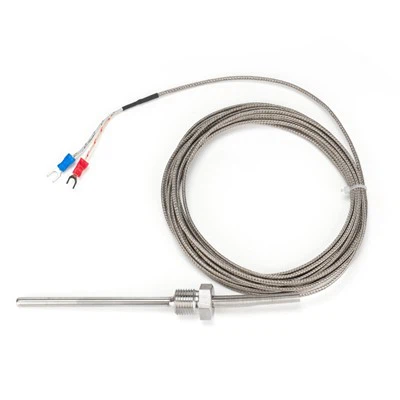
We understand that different applications have different requirements for chemical stability. Therefore, we offer customized thermocouple solutions. For example, if a customer needs a thermocouple for a highly corrosive environment, we can provide a thermocouple with a special protective coating or a more corrosion – resistant sheath material.
Smart Thermometer If you are in need of high – quality thermocouples with excellent chemical stability for your specific application, we are here to help. Our team of experts has extensive knowledge and experience in thermocouple technology and can provide you with tailored solutions to meet your needs. Contact us today to start a procurement discussion and see how our thermocouples can enhance the efficiency and accuracy of your temperature – measuring processes.
References
- "Thermocouples: Theory and Practice" by John F. Schooley
- "Handbook of Temperature Measurement" by Peter H. Beckmann
- ASTM standards related to thermocouples and their performance in different environments
Jiangsu Zhaolong Electric Co., Ltd.
We’re well-known as one of the leading thermocouple manufacturers and suppliers in China, featured by quality products and low price. Please feel free to buy customized thermocouple made in China here from our factory. Contact us for more details.
Address: No. 80, Zhangguo Chang’an Road, Dainan Town, Xinghua City, Jiangsu Province
E-mail: 180193845@qq.com
WebSite: https://www.cnzhaolong.com/
