Hey there, fellow robot enthusiasts! I’m a supplier in the robot core component game, and today I wanna chat about one of the most crucial parts of any robot – actuators. You might be wondering, "How important are actuators in robot core components?" Well, let me tell you, they’re pretty darn important, and here’s why. Robot Core Component
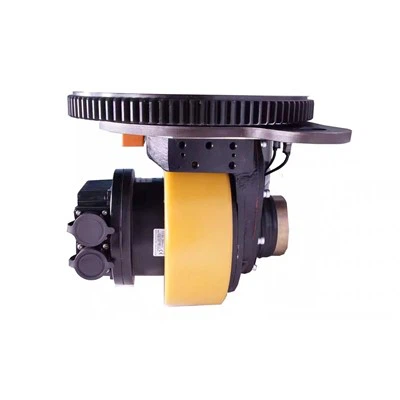
What Are Actuators Anyway?
First things first, let’s break down what actuators are. In simple terms, actuators are like the muscles of a robot. They’re the components that convert energy into motion. Just like our muscles allow us to move our arms, legs, and other body parts, actuators enable robots to perform all sorts of movements, from the tiniest, most precise ones to big, powerful actions.
There are different types of actuators out there. Electric actuators are super common. They use electricity to create motion. You’ll find these in all kinds of robots, from small household cleaning bots to industrial manufacturing robots. Hydraulic actuators, on the other hand, use fluid pressure to generate force. They’re really strong and are often used in heavy – duty robots, like those used in construction or large – scale manufacturing. Pneumatic actuators work with compressed air. They’re lightweight and can move quickly, so they’re great for robots that need to make rapid movements.
Why Are Actuators So Important?
Movement and Mobility
The most obvious reason why actuators are vital is that they give robots the ability to move. Without actuators, a robot would be a static hunk of metal and circuitry. Whether it’s a robot that’s supposed to walk, roll, fly, or manipulate objects, actuators make it possible. For example, in a humanoid robot, the actuators in its legs allow it to take steps, balance, and change directions. In a robotic arm used in a factory, actuators help it reach out, grab objects, and place them exactly where they need to go.
Precision and Control
Actuators also offer a high level of precision and control. Modern robots often need to perform tasks that require extreme accuracy. Think about a surgical robot. It has to make very precise movements inside the human body. The actuators in a surgical robot are designed to move with incredible precision, allowing surgeons to perform minimally invasive procedures with a high degree of accuracy. In a 3D – printing robot, actuators control the movement of the print head, ensuring that the layers of material are deposited exactly where they should be to create a perfect 3D object.
Adaptability
Another key aspect is adaptability. Actuators can be programmed to respond to different situations. A rescue robot, for instance, might encounter all sorts of terrains and obstacles. Its actuators can be adjusted to change the robot’s movement pattern depending on whether it’s moving over rough ground, climbing stairs, or squeezing through a narrow space. This adaptability allows robots to be used in a wide variety of environments and for different purposes.
Impact on Different Types of Robots
Industrial Robots
In the industrial world, actuators are the workhorses. Industrial robots are used for tasks like welding, painting, and assembly. The actuators in these robots need to be strong and reliable. For welding robots, the actuators must be able to position the welding torch precisely and hold it steady during the welding process. In painting robots, they need to control the movement of the paint sprayer to ensure an even coat. The high – speed and high – precision actuators we supply can significantly improve the efficiency and quality of industrial manufacturing processes.
Service Robots
Service robots, such as those used in the hospitality or healthcare industries, also rely heavily on actuators. A hotel service robot that delivers items to guests’ rooms needs actuators that allow it to navigate through the hotel corridors smoothly, avoid obstacles, and interact with doors and elevators. In healthcare, robots that assist with patient lifting and moving require actuators that can handle the weight of a human body safely and gently. Our actuators are designed to provide the flexibility and strength needed for these types of applications.
Exploration Robots
Exploration robots, like those sent to other planets or deep – sea environments, face unique challenges. The actuators in these robots need to be able to withstand extreme conditions. For example, a Mars rover’s actuators have to work in a low – pressure, cold environment with a lot of dust. They must be durable and efficient to ensure that the rover can move around, collect samples, and send back data. Our actuators are built to be rugged and reliable, making them suitable for these harsh exploration scenarios.
The Future of Actuators in Robot Core Components
As technology advances, the role of actuators in robot core components is only going to become more important. We’re seeing a trend towards more intelligent and autonomous robots. These robots will need actuators that can work in harmony with advanced sensors and control systems.
One of the exciting developments is the integration of soft actuators. Soft actuators are made from flexible materials and can mimic the movement of biological muscles more closely. They offer advantages like increased safety when interacting with humans, as they can deform and absorb impact. For example, in a robot that assists with physical therapy, soft actuators can provide a more natural and gentle range of motion.
We’re also looking at improvements in actuator efficiency. As robots become more widespread, there’s a greater need to reduce energy consumption. New actuator designs are being developed that can perform the same tasks with less power, which is not only better for the environment but also extends the battery life of robots, especially those that are mobile.
Why Choose Our Actuators?
As a robot core component supplier, we take pride in offering high – quality actuators. Our actuators are designed and manufactured with the latest technology. We’ve got a team of experts who are constantly working on improving the performance, reliability, and efficiency of our products.
We understand that every robot project is unique, so we offer a wide range of actuators to meet different requirements. Whether you need a small, high – precision electric actuator for a consumer robot or a large, heavy – duty hydraulic actuator for an industrial application, we’ve got you covered.

Our customer service is top – notch. We’re always ready to help you choose the right actuator for your project. We can provide technical support, answer your questions, and even offer custom solutions if needed.
Let’s Talk!
DEL DEL If you’re in the market for high – quality actuators for your robot project, I’d love to hear from you. Whether you’re a startup working on a new and innovative robot concept or an established company looking to upgrade your existing robots, we can provide the right components for you. Reach out to us to start a conversation about your procurement needs. Let’s work together to make your robot projects a success!
References
- Siciliano, Bruno, and Oussama Khatib, eds. Springer Handbook of Robotics. Springer, 2016.
- Spong, Mark W., Seth Hutchinson, and M. Vidyasagar. Robot Modeling and Control. Wiley, 2006.
- Lynch, Kevin M., and Frank C. Park. Modern Robotics: Mechanics, Planning, and Control. Cambridge University Press, 2017.
Hangzhou Janz Intelligent Technology Co., Ltd.
As one of the most professional robot core component manufacturers and suppliers in China, we offer a wide range of products with superior quality. Please feel free to buy advanced robot core component at competitive price from our factory. Contact us for quotation.
Address: Room 240, 2nd Floor, 289-16, Creative Road, Yinhu Street, Fuyang District, Hangzhou City, Zhejiang Province
E-mail: amy@hzjanz.com
WebSite: https://www.simplexrobots.com/
